
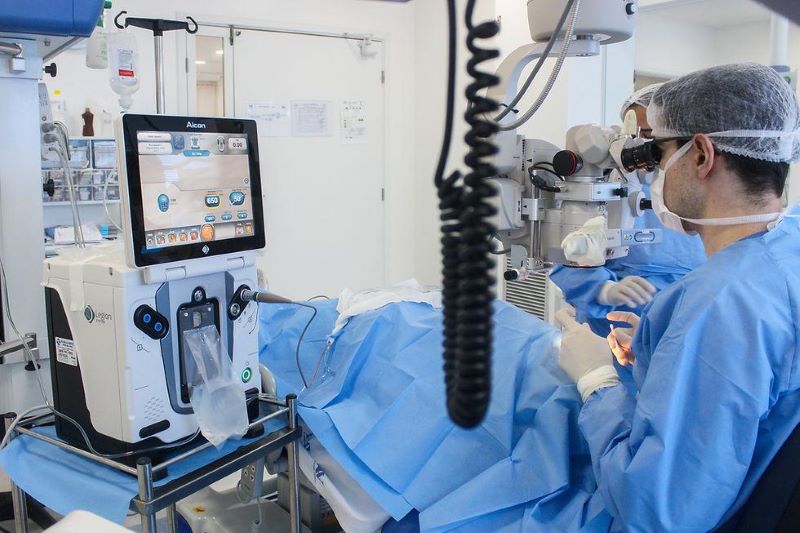
Xiran Medical Secures Nearly RMB 100 Million in Series B+ Financing, Advancing Commercialization of High-End Ophthalmic Surgical Equipment
Hangzhou-based Xiran Medical has completed a Series B+ financing round worth nearly RMB 100 million, highlighting continued investor interest in China’s high-end medical device sector. The new funding will support the registration of innovative ophthalmic products, domestic market expansion and overseas commercialization.
The financing also reflects a broader shift in medical device investment: beyond technological innovation and regulatory approval, investors are increasingly evaluating clinical adoption, sales conversion, installed equipment, recurring consumables revenue and the ability to build sustainable commercial operations.
Xiran Medical Completes Nearly RMB 100 Million Series B+ Financing
On November 5, 2026, Xiran Medical announced the completion of a Series B+ financing round worth nearly RMB 100 million.
The round was led by Approximate Medical Fund, with Zhuhai Technology Industry Group participating as a co-investor. The proceeds will primarily be used to advance the registration of innovative ophthalmic products, expand the domestic commercialization of existing products and accelerate international market development.
This marks the company’s second financing round of nearly RMB 100 million in 2026. Earlier in March, Xiran Medical completed its Series B financing, backed by Guangzhou Yuexiu Industrial Investment Fund and Taiyu Investment.
The successive financing rounds indicate continued capital support for the company’s product development and commercialization strategy.
From Regulatory Approval to Hospital Adoption: The Genesis Platform
Xiran Medical focuses on high-end ophthalmic surgical equipment. Its Genesis I and Genesis II phacoemulsification and vitrectomy integrated systems received approval from China’s National Medical Products Administration (NMPA) on December 15, 2025.
The products have been described in industry reports as China’s first approved devices of this integrated type.
The company officially began commercializing the products in June 2026. According to publicly reported company figures, within less than five months, the products had secured orders for more than 30 units, with over 10 units installed at medical institutions.
These figures represent two different stages of commercialization:
- Orders secured: More than 30 units.
- Equipment installed: More than 10 units.
The distinction matters. Orders indicate market interest and purchasing commitments, while installations provide a more direct indication of deployment and clinical adoption.
Xiran Medical is also developing a broader commercial ecosystem around its equipment, including supporting consumables, clinical training and an expanded product portfolio. The company is pursuing overseas registration and international business partnerships to support future market expansion.
What Does This Financing Signal About Medical Device Investment?
The transaction illustrates several investment considerations that are becoming increasingly important in China’s innovative medical device sector.
1. Regulatory approval is the beginning of commercialization, not the end
For medical device companies, obtaining regulatory approval is a major milestone. However, approval alone does not establish a sustainable business.
Investors increasingly need to understand whether a product can move from regulatory clearance into routine clinical use. Key indicators include hospital procurement, installation progress, physician training, utilization rates and repeat purchasing.
2. Installed equipment and consumables can strengthen revenue visibility
For equipment-based medical technology companies, the initial equipment sale may be only one part of the business model.
A more complete assessment should consider:
- Equipment orders and completed installations
- Hospital access and clinical adoption
- Supporting consumables and recurring revenue
- After-sales service and maintenance capabilities
- Physician training and customer retention
- Product upgrades and portfolio expansion
A company that can build an integrated equipment-and-consumables business may have a stronger foundation for long-term revenue generation than one relying exclusively on equipment sales.
3. Overseas expansion requires more than product competitiveness
International expansion can create additional growth opportunities for Chinese medical device companies. However, entering overseas markets involves regulatory requirements, local distribution networks, clinical validation, service infrastructure and market-specific commercialization strategies.
Investors evaluating an international growth plan should distinguish between completed regulatory milestones, ongoing registration work, signed commercial partnerships and actual overseas sales.
What Should Investors Evaluate When Financing a Medical Device Company?
The Xiran Medical transaction provides a useful context for understanding how investors may assess medical device companies at different stages of development.
| Evaluation area | Key questions |
|---|---|
| Technology and product | Does the product address a clear clinical need? What differentiates it from existing alternatives? |
| Regulatory status | Has the product obtained the necessary approvals? What additional registrations are required? |
| Clinical adoption | Are hospitals purchasing and installing the product? Is physician adoption increasing? |
| Commercial performance | How do orders, installations and recognized revenue compare? |
| Business model | Are there recurring revenue streams from consumables, services or maintenance? |
| Market expansion | Can the company scale across regions and enter international markets? |
| Financing strategy | Will the next funding round support a clearly defined commercial or strategic milestone? |
The appropriate financing strategy depends on the company’s development stage, capital requirements, market opportunity and the milestones it needs to achieve before its next financing or strategic transaction.
For early-stage companies, financing may focus on product development, clinical validation and regulatory approval. For companies with approved products, capital may increasingly be directed toward hospital penetration, commercial infrastructure, production capacity and international expansion.
Implications for Medical Device Companies Preparing for Their Next Financing Round
For medical device companies preparing to raise capital, the key challenge is to translate technical achievements into an investment proposition that financial and strategic investors can evaluate.
A strong financing presentation should clearly explain:
- Product differentiation: The clinical problem addressed and the product’s competitive advantages.
- Regulatory progress: Existing approvals, pending registrations and the regulatory roadmap.
- Commercial traction: Orders, installations, hospital coverage and revenue development, with each metric clearly defined.
- Revenue model: Equipment sales, consumables, service income and other potential recurring revenue.
- Capital requirements: The amount of funding required and the specific milestones it will support.
- Exit and strategic options: Potential acquisition opportunities, strategic partnerships and longer-term capital market pathways.
The ability to connect product performance, clinical adoption and commercial growth is becoming increasingly important in medical device fundraising.
How Tianchao Capital Supports Healthcare Financing and Strategic Transactions
As healthcare companies move from product development toward commercialization, financing requirements often become more complex.
A successful financing process requires more than identifying potential investors. Companies need a well-defined financing strategy, a clear investment narrative, appropriate investor targeting, transaction structuring and professional execution.
Tianchao Capital provides financial advisory services to healthcare companies, including private financing, M&A advisory, strategic cooperation and cross-border business development.
For medical device companies, financing preparation may involve evaluating the company’s development stage, refining its investment proposition, identifying suitable financial and strategic investors, and aligning fundraising objectives with commercial milestones.
Planning a financing round for a medical device company?
If your company is preparing for product commercialization, expanding hospital coverage, developing overseas markets or evaluating strategic financing options, Tianchao Capital can help assess the transaction strategy and financing opportunities.
- Explore Tianchao Capital’s Private Financing Services
- Learn More About Our Advisory Services
- Contact Tianchao Capital